The Emerald Tree Skink
A bright green tree lizard from the forests of Southeast Asia and the Pacific. They're fast, curious, social, and they'll happily watch you back all day. They're also not a beginner's pet. This is everything I've learned about keeping them properly.
Knowledge, natural housing, and responsible breeding.
New to the species?
Start with the honest questions: whether they suit you, what you need ready, and what it all costs.
Is this skink for me?
An honest look at who they suit and who they really do not, before you spend anything.
Find out →Beginner checklist
Everything set up, running and stable before the animal comes home.
See the checklist →What it costs
One-off setup versus what you keep paying, and where not to cut corners.
See the costs →Explore the guide
Everything from what they are and where they come from to how I actually keep mine.
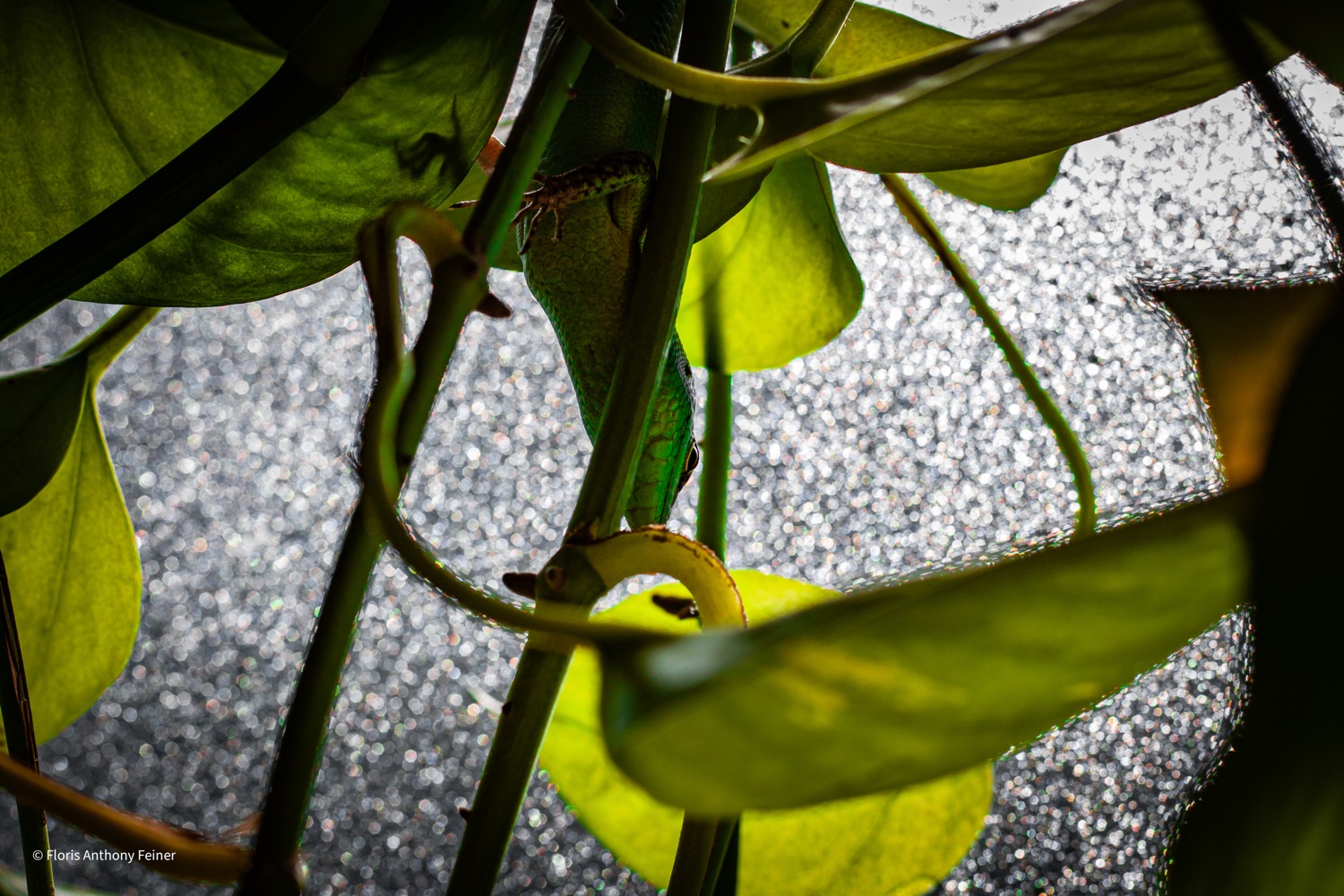
Species profile
Identification, natural range, behaviour and where the emerald tree skink sits in the reptile family tree.
Read profile →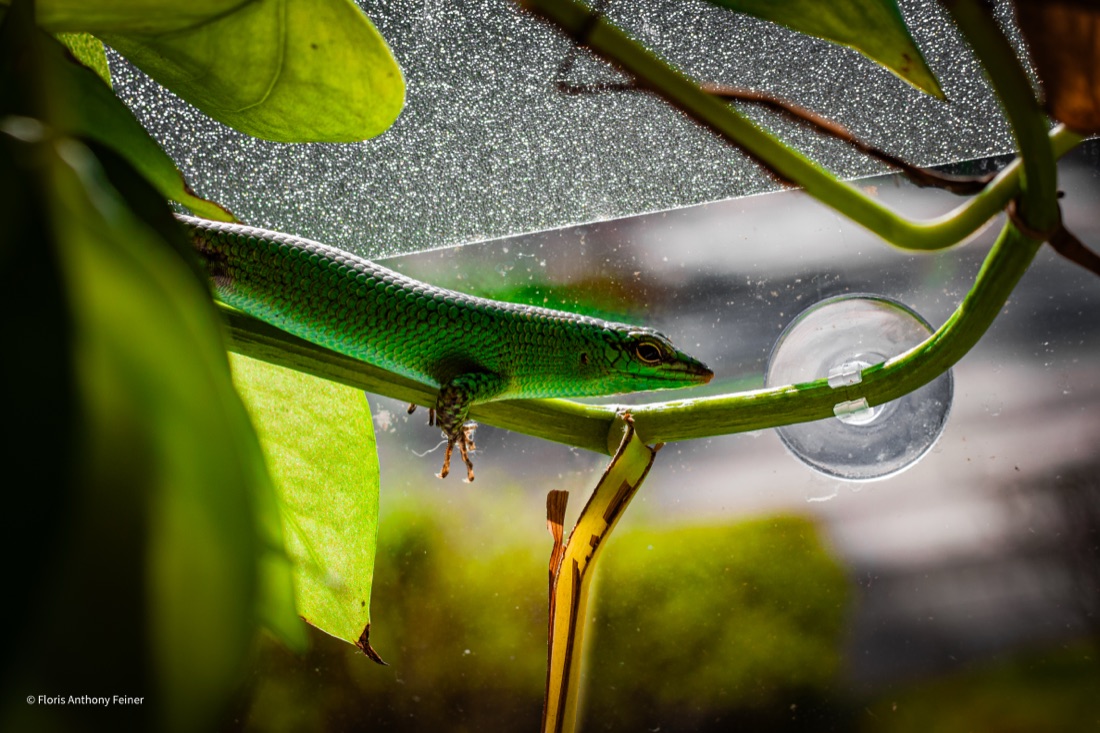
Subspecies & colour forms
Regional colour and pattern variation across Indonesia, the Philippines, New Guinea and the Pacific.
Compare subspecies →
Husbandry & diet
Feeding schedules, feeder insects, supplementation, humidity, hydration and handling.
Care guide →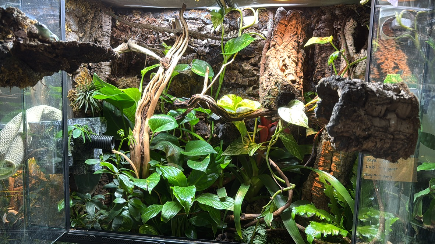
Terrarium
Enclosure size, safe live plants, UVB, heat gradients, lighting and the tech that runs it.
Build a setup →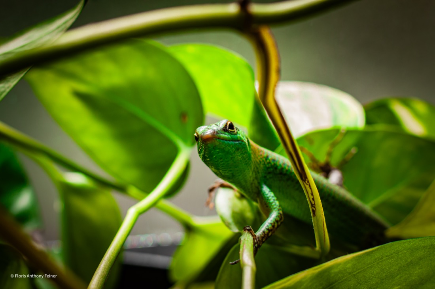
Health
Common issues, quarantine, and the welfare gap between wild-caught and captive-bred animals.
Health & welfare →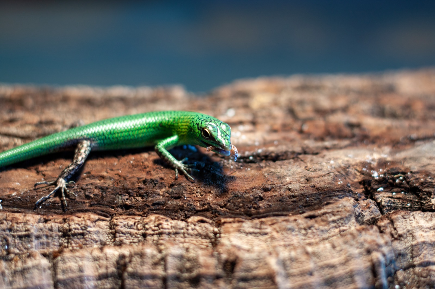
Breeding
Sexing, pairing, egg-laying and incubation notes for this still-uncommonly-bred species.
Breeding notes →A tree lizard, through and through
Lamprolepis smaragdina is one of the few skinks that took to the trees full time. Mine spend the day racing up bark and basking high on a branch, and they almost never come down to the floor. If you get one thing right in your setup, make it this: they live up, so build up.
The green isn't only for show. The bright green colour hides them in the sunlit leaves. The colour it thought to shifts with their mood and health. A dull, greyish skink is usually telling you something's wrong, which makes colour one of the easiest daily health checks a keeper can have.
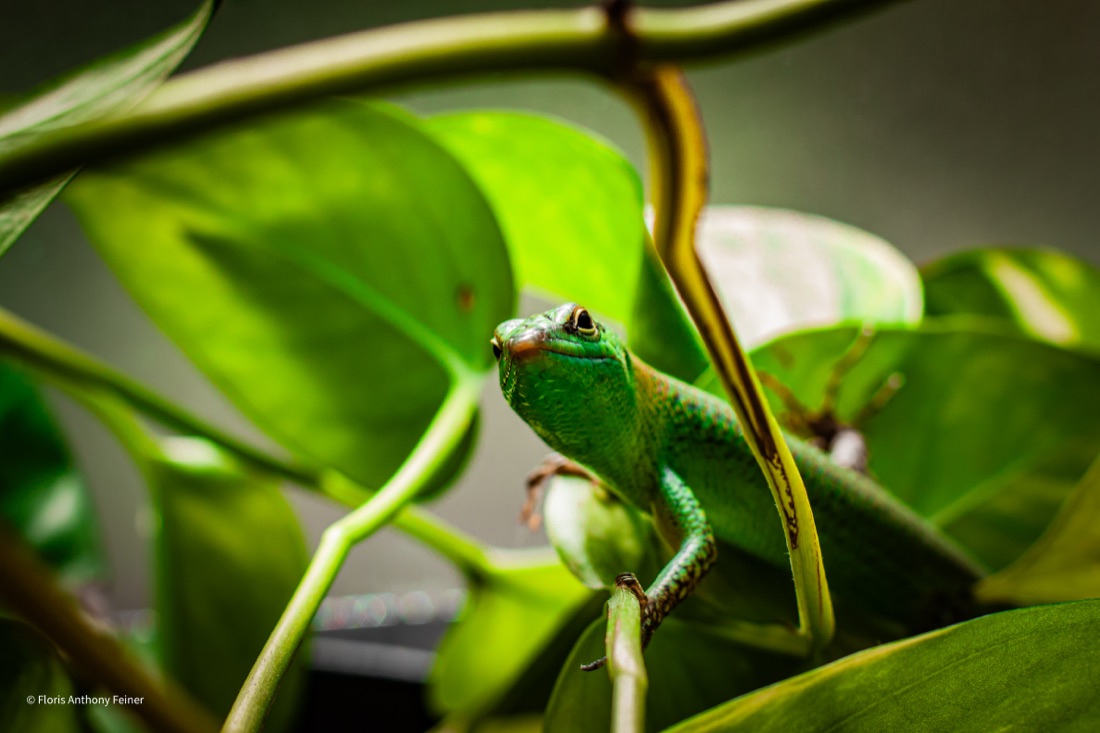
Meet Naga, Loki, Ron, Raya & Pip
Every photo on this site is of my own emerald tree skinks. © Floris Anthony Feiner